
New Names for an Old Problem: Why “Flation” Language Is Everywhere
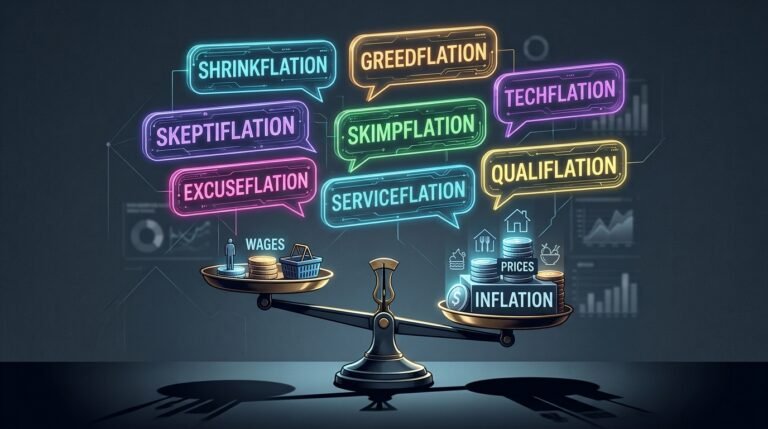
A small wave of new “flation” terminology has entered everyday financial conversation this year, as persistently elevated prices keep the cost of living squarely on consumers’ minds. Whatever the specific label attached to a given month’s price pressure, the underlying reality for household budgeting hasn’t changed much: prices for many everyday goods and services remain meaningfully higher than they were a few years ago, and wage growth for a large share of workers hasn’t fully kept pace.
For long-term savers, persistent inflation isn’t just a headline discomfort — it’s a direct, quantifiable threat to the real purchasing power of money sitting in low-yield accounts. A dollar earning close to nothing in a standard checking account loses value in real terms every year inflation runs above that rate, even though the number on the statement never goes down.
It’s one of the clearest, least exciting arguments for why disciplined, long-term investing matters more than short-term market timing: the goal isn’t to beat inflation in any single month, it’s to compound returns over years in a way that reliably outpaces the slow, steady erosion that comes from leaving money uninvested. New terminology may keep appearing to describe the phenomenon; the underlying planning response stays the same.
 By Invitation
The Insiders Club
Get early access to a curated set of higher-risk, higher-reward opportunities, alongside your core plan.
Learn MoreReady to start saving for your future?
Get a free consultation. We’ll explain how it works in your situation — no pressure, no jargon.
Request a Consultation